
Memorandum D10-15-28 - Tariff Classification of Footwear, Covering the Ankle
Ottawa, March 31, 2026
ISSN 2369-2391
This document is also available in PDF (701 KB)
Plain language summary
Targeted audience: importers of commercial goods
Key content: Provides an outline of the CBSA's administrative tariff classification policy of footwear, covering the ankle.
Keywords: footwear, shoes, boots, ankle, covering the ankle
Updates made to this D-memo
This D-memo has been updated to reflect accessibility and plain language considerations.
Definitions
1. This memorandum provides guidance for interpreting the term “covering the ankle”, as found in Chapter 64 of the Customs Tariff (Tariff).
2. The Section and Chapter Notes in the Tariff offer no definition of either “covering” or “ankle”. Likewise, the relevant Explanatory Notes offer no clarification. In the absence of clarity in the relevant notes, the following dictionary definitions of the terms will be used.
- Ankle
- The joint connecting the foot to the leg, marked by the projections (malleolar zone) formed on the outside by the fibula, on the inside by the tibia.
- Covering
- A thing used to cover, protect or conceal something else.
Guidelines
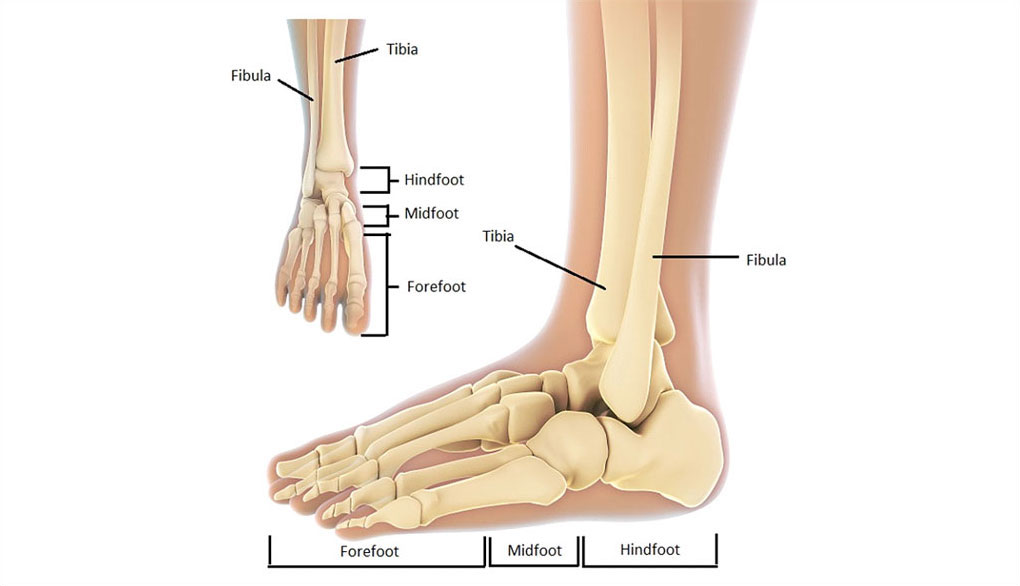
3. For tariff classification purposes, the ankle is the area of the ankle joint where the leg and foot join – commonly called the “ankle bone” and anatomically referred to as the “malleolar zone” (refer to Appendix figure 1).
4. The foot portion of the ankle joint includes the midfoot (arch) – made up of the Navicular, Cuboid and Cuneiforms bones, and the hindfoot (heel) – made up of the Talus and Calcaneus bones. The lower leg portion of the joint consists of both the tibia and fibula bones (refer to Appendix figure 2).
5. In order to satisfy the terms of “covering the ankle”, the footwear upper must provide 100% coverage of the midfoot, hindfoot and malleolar zone.
6. Partial coverage of the midfoot, hindfoot and malleolar zone, no matter how large or small, does not satisfy the terms of “covering the ankle”.
7. Footwear with straps, ties, lacing, buckles, ribbons or ornamental trimmings, readily identifiable as part of the upper and designed to be positioned anywhere on the ankle, but not providing 100% coverage of the midfoot, hindfoot and malleolar zone, does not meet the terms of “covering the ankle”.
8. Footwear that features an upper with cut-out or punch-out shapes or patterns that expose the midfoot, hindfoot or ankle joint area does not meet the terms of “covering the ankle”.
9. Footwear that is considered to cover the ankle, as described above, but is designed with open toes, which means that the wearer’s toes (phalanges) are not covered, are classified under a “covering the ankle” subheading.
Additional Information
10. Procedures to obtain an advance ruling for tariff classification of goods are outlined in Memorandum D11-11-3: Advance Rulings for Tariff Classification.
Appendix

References
Consult these resources for further information.
Applicable legislation
Related D memoranda
Issuing office
Tariff Classification, Origin and Valuation Division
Trade Programs Directorate
Commercial and Trade Branch
Contact us
- Date modified: