
Tariff Classification of Certain Printed Flags and Banners
Memorandum D10-14-66
ISSN 2369-2391
Ottawa,
This document is also available in PDF (451 KB) [help with PDF files]
In Brief
This memorandum has been updated to reflect accessibility and plain language considerations.
Definitions
- Unbleached woven fabric:
- Woven fabric made from unbleached yarn and which has not been bleached, dyed or printed.
- Bleached woven fabric:
- Woven fabric which has been bleached or dyed white or treated with a white dressing, and consists of bleached yarn or a combination of unbleached and bleached yarn.
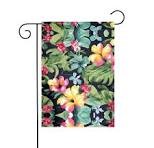
- Dyed woven fabric:
- Woven fabric which is dyed a single uniform colour other than white or has been treated with a coloured finish other than white, or consists of coloured yarn of a single uniform colour.
- Woven fabric of yarns of different colours:
- Woven fabric (other than printed woven fabric) which consists of yarns of different colours or yarns of different shades of the same colour (other than the natural colour of the constituent fibres). It also consists of unbleached or a combination of bleached yarn and coloured yarn, or marled yarn or mixture yarns.
- Printed woven fabric:
- Woven fabric which has been printed, whether or not made from yarns of different colours. It includes woven fabrics bearing designs made, for example, with a brush or spray gun, by means of transfer paper, by flocking or by the batik process.
The definitions above apply, mutatis mutandis, to knitted or crocheted fabrics.
(Complete legal definitions can be found in Subheading Notes 1(d) through (h) to Section XI. The definitions in the Customs Tariff take precedence over those reproduced in this D-Memo.)
Guidelines
1. This memorandum outlines the CBSA’s policy regarding the tariff classification of printed textile flags and banners, taking into account the Canadian International Trade Tribunal (CITT) jurisprudence.
2. This memorandum includes certain examples of printing that represent the essential character of the goods, which would result in a flag or banner being classified in heading 49.11 as “Other printed matter”.
3. The memorandum also includes examples of decorative images or designs printed on textile flags and banners, where the printing is not the essential character of the goods. These are classified under heading 63.07 as "Other made up textile articles."
CITT Jurisprudence
4. The CITT Appeal AP-2009-056 (Future Product Sales Inc. v. President of Canada Border Services Agency) concerned the classification of single-piece, textile flags and banners printed with National Hockey League (NHL) team logos.
5. The issue was whether these flags and banners printed with NHL logos are classified under heading 49.11 as “Other printed matter” versus heading 63.07 as “Other made up articles”.
6. The CITT found that the NHL team logos had an importance that was well beyond that of decoration. The CITT noted that the pictorial representations of NHL team logos are protected registered trademarks, whose use entails strict production and quality control parameters.
7. The Explanatory Notes (EN) to Chapter 49 emphasize that there are only a “few exceptions” to the general principle that Chapter 49 is to cover all printed matter whose essential nature and use is determined by such representations.
8. In regard to the goods at issue, the CITT found it was the printed NHL team logo that conferred the essential nature and use of the goods, and that the NHL team logos were not merely for “decorative or novelty” purposes. Accordingly, the flags and banners were classified under heading 49.11.
9. However, the CITT also stated that a textile flag or banner with printed decorative pictures or designs would be considered a made-up textile article of Chapter 63, provided the pictures or designs did not represent the essential nature of the good.
Heading 49.11 – “Other printed matter”
10. Based on the above-noted decision, below are examples of the type of printing included on a flag or banner that would result in the item being classified in heading 49.11 as “Other printed matter”:
- Registered trademarks;
- Logos;
- Advertisements;
- Corporate and organizational flags and banners, such as those used by the Red Cross;
- National, military, head-of-state and regional flags would be included if they meet official proportion, colour and design specifications, etc.;
- School flags and banners with official designs, such as crests; and
- Traffic flags and banners with text or symbols that are used to convey important information, such as the “men-at-work” symbol.


Heading 63.07 – “Other made up textile articles”
11. The ENs to heading 63.07 include flags. The flags classified under heading 63.07 are printed textile articles in which the printing does not affect the essential character of the goods; the printing is mainly for decorative or novelty purposes.
12. Further to the CITT decision mentioned above, the following are examples of printed decorative pictures or designs on flags and banners that would be classified in heading 63.07 as “Other made up textile articles”:
- artisanal designs (e.g., flower, geometric or other decoration);
- seasonal decorations (e.g., Christmas); and
- repetitive designs (e.g., stripes, colours).
13. Flags or bunting of heading 63.07 with festive decorations are excluded from heading 95.05 (“Festive, carnival or other entertainment articles, including conjuring tricks and novelty jokes”), according to Note 1(f) to Chapter 95 and exclusionary note (g) in the Explanatory Note to heading 95.05.
14. Based on Note 7 to Section XI, a flag that is sewn or otherwise made up from textile pieces or shapes that are not printed are classified in Heading 63.07. For example, a Canadian flag made up from two pieces of red fabric, one piece of white fabric and a piece of red fabric cut into the shape of the insignia maple leaf is classified in heading 63.07. The same would be true of a Canadian flag composed of two pieces of red fabric appropriately sewn together with a piece of white fabric onto which the red maple leaf insignia has been printed.

Additional Information
15. For certainty regarding the tariff classification of a product, importers may request an advance ruling for tariff classification. Details on how to make such a request are found in CBSA Memorandum D11-11-3, Advance Rulings for Tariff Classification.
References
Consult these resources for more information
- Applicable legislation
-
(CITT) Appeal AP-2009-056 (Future Product Sales Inc. v. President of Canada Border Services Agency)
- Related links
- Tarif des douanes
- Issuing office
-
Trade Policy Division
Trade and Anti-dumping Programs Directorate
Commercial and Trade Branch
Contact us
Page details
- Date modified: