
Statement of Reasons—Initiation of investigation: Truck and Bus Tires (TBT 2026 IN)
Concerning the initiation of the investigations into the alleged dumping and subsidizing of truck and bus tires originating in or exported from China.
Decision
Ottawa,
Pursuant to subsection 31(1) of the Special Import Measures Act, the Canada Border Services Agency initiated investigations on August 17, 2026 respecting the alleged injurious dumping and subsidizing of truck and bus tires originating in or exported from the People’s Republic of China.

On this page
Summary
[1] On July 10, 2026, the Canada Border Services Agency (CBSA) received a written complaint from the Canadian Retread Manufacturers Association / Association Canadienne des Manufacturiers du Rechapage (the “CRMA”) and Michelin North America (Canada) Inc. (Michelin) (collectively, the “complainants”), alleging that imports of certain truck and bus tires (hereinafter, “TBT”) originating in or exported from the People’s Republic of China (“China” or “the subject country”), are being injuriously dumped and subsidized.
[2] On July 31, 2026, pursuant to paragraph 32(1)(a) of the Special Import Measures Act (SIMA), the CBSA informed the complainants that the complaint was properly documented. On August 11, 2026, the CBSA informed the Government of China that a properly documented complaint had been filed. At that time, the Government of China was provided with a non-confidential version of the subsidy complaint and was invited for consultations pursuant to Article 13.1 of the Agreement on Subsidies and Countervailing Measures, prior to the initiation of the subsidy investigation. The CBSA did not receive any request for consultations.
[3] The complainants provided evidence to support the allegations that certain TBT from China have been dumped and subsidized, as well as evidence that discloses a reasonable indication that the dumping and subsidizing have caused injury or are threatening to cause injury to the Canadian industry producing like goods.
[4] On August 31, 2026, pursuant to subsection 31(1) of SIMA, the CBSA initiated investigations respecting the dumping and subsidizing of TBT from China.
Interested parties
Complainants
[5] The names and addresses of the complainants are as follows:
Canadian Retread Manufacturers Association (Association Canadienne des Manufacturiers du Rechapage)
2500-666 Burrard St
Vancouver, British Columbia V6C 2X8
Michelin North America (Canada) Inc.
2863 Granton Rd
New Glasgow, Nova Scotia B2H 5E6
Other producers
[6] The complainants stated that, collectively, they represent over 50% of domestic production of like goods in Canada. The complainants attribute the remaining production to other retreaders of TBT in Canada and have listed all known Canadian producers and associations of producers of like goods.Footnote 1
[7] The CRMA members who support the complaint are Kal Tire Ltd., Fountain Tire Ltd., Pneus Metro Inc., Pneus Robert Bernard, and J.D. McArthur Tire Services Inc.Footnote 2 The complaint is also supported by RTS Ringtread Systems (1995) Inc. and Tiremaster Limited, Canadian retreaders that are not part of the CRMA.Footnote 3
Trade unions
[8] The complainants are not aware of any trade unions that represent persons employed in the production of like goods in Canada.Footnote 4
Exporters
[9] The CBSA identified 68 potential exporters and/or producers of the subject goods from CBSA import documentation and from information submitted in the complaint. All of the potential exporters whose contact information was identified were asked to respond to the CBSA’s dumping request for information (RFI), Subsidy RFI, and Section 20 RFI.
Importers
[10] The CBSA identified 192 potential importers of the subject goods from CBSA import documentation and from information submitted in the complaint. All of the potential importers whose contact information was identified were asked to respond to the CBSA’s Importer RFI.
Government
[11] Upon initiation of the investigations, the Government of China was sent the CBSA’s Government Subsidy RFI and the Government Section 20 RFI.
[12] For the purposes of these investigations, the Government of China refers to all levels of government (i.e., federal, central, provincial/state, regional, municipal, city, township, village, local, legislative, administrative or judicial, singular, collective, elected or appointed). It also includes any person, agency, enterprise, or institution acting for, on behalf of, or under the authority of, or under the authority of any law passed by, the government of that country or that provincial, state or municipal or other local or regional government.
Product information
Definition
[13] For the purpose of these investigations, subject goods are defined as:
Additional product informationFootnote 6
1. Market segments
[14] The TBT that are subject to these investigations are designed to be mounted on vehicles such as medium and heavy trucks, commercial trailers, buses, and recreational vehicles (RVs), that form part of the "commercial truck and bus" tire market segment.
[15] The market segment relevant to the subject goods is referred to within the tire industry by the abbreviations "TBT" (short for "Truck and Bus Tires") or "TBR" (short for "Truck and Bus Radial"). "TBR" is the more commonly used term. These terms do not have standard definitions, and the subject goods may include tires suitable for use on vehicles that might be classified as either "medium" or "heavy" duty.
[16] The subject goods do not include "PLT" (Passenger & Light Truck) market segment tires, which are designed for use on consumer passenger vehicles in the PLT market segment such as cars, light-duty and standard-size pickup trucks, minivans, SUVs and vans, and light trucks. The subject goods also do not include tires designed for use on motorcycles.
[17] The subject goods have rim sizes ranging from 17.5" to 24.5", but always with a rim size that ends in a half inch size ".5" (or nominal metric equivalent). In North America, passenger vehicle and light truck tire rim sizes are always denominated as a whole number (17", 19", 22" etc.) to distinguish them from commercial TBT.
[18] The subject goods only include tires rated partially or entirely for on-road use, which includes hybrid tires designed for both on-road and off-road applications, but the subject goods do not include tires that are specifically designed for vehicles in the Off-The-Road ("OTR") market segment.
[19] The subject goods do not include used (spent) tires or tire casings that are no longer suitable for highway use that have not yet been retreaded and does not include replacement tread rubber.
[20] Subject TBT may be imported either mounted on wheels or rims or not, and may be accompanied by other parts, e.g., a wheel, rim, axle parts, bolts, nuts, etc. However, subject goods do not include TBT that are imported already installed on vehicles.
2. Regulatory requirements
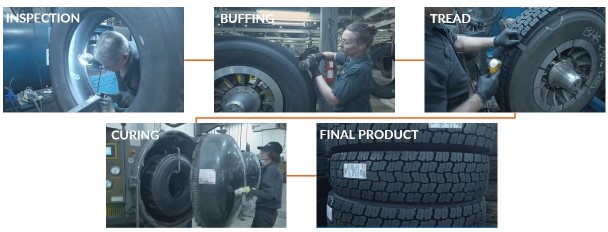
[21] CBSA Memorandum D19-12-2 discusses customs and "other government department" regulatory requirements for the importation of tires. The categories that CBSA uses to distinguish tires for import enforcement purposes are: (i) new on-road tires, (ii) used on-road non-truck tires, (iii) used on-road truck tires, (iv) new and used off-road tires, (v) retreaded, remolded, or recapped on-road tires, (vi) retreaded, remolded, or recapped off-road tires, (vii) rubber scrap, and (viii) exempt temporary importations. The subject goods include tires in CBSA categories (i), (iii), and (v) and potentially, any diverted subject goods from category (viii) that are not re-exported within specified time frames.
3. Construction type and physical composition
[22] The subject goods include all constructions of tires, including radial and bias.
[23] Regardless of type and design, the tires at issue are composed of several basic components including the following:
- (a) Rubber compounds
- A blend of natural and/or synthetic rubbers, together with fillers, reinforcements, sulfur, and other chemical additives, used to produce the various parts of the tire in accordance with the required mechanical and performance characteristics
- (b) Innerliner
- An airtight layer of synthetic rubber applied during the building process to seal the tire's interior and retain inflation pressure, replacing the traditional inner tube
- (c) Body plies
- Reinforcement layers made from textile cords and/or other reinforcing materials such as steel wire that provide strength to the tire structure and help contain inflation pressure
- (d) Steel belts and reinforcement components
- Steel belts, metal reinforcements, and other reinforcing plies used to provide strength and stability to the tread area and to contribute to durability and performance under load
- (e) Beads
- High-resistance metal wire hoops or bead bundles that ensure a secure fit between the tire and the rim
- (f) Sidewall
- Rubber components applied to the sides of the tire to protect the body plies and provide resistance to abrasion, scuffing, weathering, and lateral impacts
- (g) Tread
- The outer rubber component that comes into contact with the road and provides grip, traction, and resistance to wear
4. Size
[24] The three relevant measurements that determine the "size" of a particular truck and bus tire are: (1) rim diameter, which in Canada is always expressed in imperial measurement (inches); (2) width, which may be expressed in either inches or millimeters; and (3) aspect ratio, which signifies the tire's sidewall height as a percentage of tire width.
5. Tread pattern
[25] Tread design is proprietary and differs for each brand and model of tire. All tread design types are considered like goods.
6. Load range, ply rating and load index
[26] Load range and ply rating are markings that may appear on the side of a tire sidewall that identify how much load the tire can safely carry at a specified inflation pressure. "Load range" and "ply rating" are units of measurement published by the United States (U.S.) Tire and Rim Association and are in common use in Canada although not prescribed by Canadian regulation. Ply rating is a historical tire strength measurement expressed in equivalent number of rubber plies that there would be in a bias ply tire of the same strength. Load range is an alphabetical code from B through M that indicates a tire's maximum carrying capacity at a specific inflation pressure.
[27] The subject goods include all load and ply ranges that are applicable to goods of the relevant rim size suitable for use on trucks and busses that are not light trucks or OTR vehicles. Products of varying load and ply ranges may form part of the same class of goods and compete with domestically produced TBR tires. Subject goods would normally be expected to have a load range of "G" or greater or a "ply rating" of 14 or higher, although the Canadian Motor Vehicle Safety Regulations set out parameters for "large motor vehicles" as tires with a load range of not less than D or a ply rating of not less than 8. Light truck tires, which are excluded from the scope of subject goods, may have load ranges ranging from "B" to "F", corresponding to ply ratings from 4 to 12, so there is some overlap.
7. Brand reputation, mileage expectation and "tiers"
[28] A marketing terminology in common use within the tire industry is the concept of "Tiers". "Tiers" are a way to loosely position a particular tire brand along a spectrum of quality based on the reputation of the manufacturer, which is in turn based on aspects of design, construction, input materials, performance in particular use applications, and the expected kilometer mileage of the tires. "Tier" designations are subjective and driven by the reputation of the manufacturer and subjective perception within the marketplace of a particular brand's quality. For retreaders, the terminology of "Tiers" also refers to the expected number of times that a particular tire's casing can be retreaded, subject to actual condition and use.
Production processFootnote 7
[29] While the production process for new tires and retreaded tires differs in some respects, there are many similarities between the two processes and they result in products that directly compete with one another in the Canadian market.
New tires
[30] The manufacturing process for new TBT involves multiple stages, including raw material preparation, component fabrication, tire assembly, curing, quality inspection, and testing. According to the complainants, the production process for new TBT is materially the same regardless of the quality "Tier" of the tire; the main differences are in the product's design and the quality and proportion of the raw materials used, such as proprietary rubber formulas.
Raw material preparation
[31] The process begins with the preparation of raw materials known as rubber compounds. There are two types of rubber that can be used: natural rubber and synthetic rubber. In addition to rubber, reinforcing fillers such as carbon black and silica, metal reinforcements, textile materials, sulfur, and other chemical additives are incorporated into the compounds to create the exact specifications for the particular tire type.
Component fabrication
[32] Once the raw materials are prepared, individual tire components are produced, which include the inner liner, body plies, steel belts, sidewalls, beads, and tread. Each component is produced separately using processes such as extrusion, calendaring, coating, and wire preparation to create the appropriate shape, thickness, and reinforcement structure.
[33] The inner liner consists of an airtight layer of synthetic rubber that seals the tire interior. Reinforcement components include textile cords and metal-reinforced plies. The beads consist of high-resistance metal wire hoops that ensure a secure fit between the tire and rim.
Tire assembly
[34] The tire manufacturing process begins on a specialized piece of machinery known as the building drum, a rotating cylinder equipped with an inflatable center. Building drum is where the various components are assembled in a specific sequence. First, an inner liner made up of a sheet of airtight synthetic rubber is applied to the building drum. This liner is fundamental as it replaces the traditional inner tube and seals the tire's interior. Second, a matrix of textile plies or textile cords designed for reinforcement is added atop the initial layer. Then, the side walls are bolstered. To bolster the side walls, additional layers are introduced enhancing durability.
[35] Central to the tire's design are the bead wires, high-resistance metal hoops that ensure a secure fit onto the rim. These are meticulously installed with the casing ply folded over to anchor everything in place. To protect against the rigors of mounting and to provide additional rigidity, layers of protective rubber and adhesive are applied with precision tools and techniques employed to eliminate any trapped air bubbles. In an essential step, sidewall components crafted from flexible, resistant rubber are adhered to shield the tire from lateral impacts. Advanced technology, including laser markets and RFID chips are utilized to ensure precision and traceability throughout the manufacturing process.
[36] At the end of this stage, the assembled but uncured tire is referred to as a "green tire." Although it has the form of a finished tire, it has not yet undergone curing.
Curing
[37] Once assembly is complete, the green tire is placed into a mold and subjected to heat and pressure in a curing press. During this process, an internal bladder applies pressure to force the uncured material into the mold, forming the tread pattern and sidewall markings. Heat initiates vulcanization, a chemical reaction involving sulfur and rubber that bonds the tire components together and transforms the rubber from a plastic state to the final elastic form of tire. The length of time for the curing process varies depending on the size of the tire.
Quality inspection/testing
[38] The final step is quality control, which is integrated throughout the manufacturing process. Tires are inspected and tested at multiple stages of production to ensure that they meet the producer’s manufacturing specifications and safety requirements. Final inspection procedures verify the structural integrity and uniformity of each tire before it is released for distribution.
[39] All finished tires undergo aspect inspection, meaning a visual inspection for surface defects and uniformity. In addition, a sample of produced tires undergo further non-destructive testing methods to assess internal and external integrity, including sampling for uniformity and X ray inspection in accordance with Michelin's quality-control protocols. These methods may include X-ray analysis, shearography, echography, ultrasound, and architecture verification. X-ray analysis is a non-destructive method used to inspect the internal structure of a tire for defects not visible to the naked eye, such as broken steel cords, structural separations, or misalignments.
- Shearography is a laser-based, non-destructive inspection method used to identify subsurface anomalies within a tire's structure – such as separations, voids, or blisters
- Echography refers to non-destructive inspection techniques that use acoustic or similar technologies to analyze the internal structure of a tire
- Ultrasound inspection uses high-frequency sound waves to assess tire integrity and detect internal defects without dismantling the tire
- Architecture verification refers to the assessment of a tire's structural design and construction to ensure compliance with performance, safety, and durability requirements
[40] Tires may also undergo performance testing in service conditions or on vehicles to verify operational safety and performance characteristics.
Retreaded tires
[41] Tire "retreading" is a process by which used tire casings, whose treads are worn such that the tire is no longer road-worthy, are recovered, and remanufactured through the addition of new tread to the existing casings, thereby extending their useful lives as opposed to scrapping the otherwise unusable casing. These products are commonly referred to in the tire industry as "retreads".
[42] Retreads have all the same uses and characteristics as new TBT, and they are sold to the same customers (principally commercial truck and bus fleet operators) through the same channels of distribution.
[43] Retreads are produced using spent tire casings, new tread rubber, and other chemicals, paints, and adhesives as input materials. The spent casings undergo a further manufacturing process in which the worn tread material is removed and shaved down, the casing is repaired and patched, new tread rubber is applied, and the whole tire is re-vulcanized to create a permanent bond. Without retreading, the spent tire would go to a landfill. In this sense, the retreading process is equivalent to the manufacture of new products from recovered scrap materials.
[44] Retreaded tires are a cost effective and environmentally friendly tire option for bus and truck fleet operators because it extends the usable life of spent tires that would otherwise be discarded as scrap or waste.
[45] Retreads are produced through the following process steps, which are described in more detail in Kal Tire's public witness statement and share many of the same production steps as a new tire:
Initial inspection
[46] Tires undergo visual and automated tests to ensure they are in good enough condition for retreading. A shearography process looks for separation between belt layers, and puncture holes are detected electrically.
Buffing
[47] Tires undergo computer-controlled buffing to deliver precise crown contours and consistent under-tread thickness.
Skiving and repair
[48] Tires with holes are patched or repaired, addressing surface imperfections to ensure adhesion of the tread.
[49] Application of Cushion Gum and New Tread: A layer of non-vulcanized gum rubber with even thickness is applied, followed by a pre-vulcanized tread. An envelope and arc band is attached to ensure an air-tight seal.
Curing
[50] Tread rubber is strengthened in a curing chamber, under tight time, temperature, vacuum, and pressure control.
Final inspection and testing
[51] Retreads are inspected and tested, and the sidewalls are painted.
Figure 1: Retreading process steps
[52] Most retreaders are franchised licensees of proprietary retreading processes developed by the major tire manufacturers. There are three principal retreading processes used in Canada:
- Bandag® – owned by Bridgestone
- Michelin® Retread Technologies ("MRT") and Oliver® Rubber Company – owned by Michelin and
- UniCircle® – owned by Goodyear
[53] Each process entails its own unique retreading equipment and replacement tread rubber, which are available for purchase from the process owner. Any process can be used to retread any tire casing; there are no technical or contractual constraints on the type of tire casings that can be retreaded using a particular company's process and replacement treads.
[54] Although retreading differs from the manufacture of a new tire from raw materials because it reuses the original casing, it nevertheless transforms material inputs through a manufacturing process into a finished retreaded tire for sale or supply in the Canadian TBT market through similar steps in the manufacturing process involving preparation of input materials, tire assembly, curing, and quality inspection and testing. The remanufactured TBTs can then be used in lieu of purchasing a brand new TBT.
[55] Tire casings can only be retreaded if they meet a certain quality standard in the casing's original construction, rubber thickness, placement of internal steel cables and overall quality of materials. Tire casings with inferior quality rubber and internal cabling do not stand up to the secondary vulcanization process necessary to retread a tire. While there is no legally-prescribed certification process for retreaded tires in Canada, a retread must meet the quality control standards of its particular retreading process, and retreaders are subject to audit by the process licensor to ensure they meet applicable standards.
[56] Used tire casings and the retreads produced from them are assigned grades based on their quality and substitutability to new tires, and whether they can be retreaded additional times. For example, "A" grade casings are considered highest quality and a retread produced from an "A" casing is comparable in quality and mileage to Tier 2 new tires, while retreads made from a "C" grade casing may be equivalent to a Tier 3 tire. For this reason, there is as much price variation among retreads as there is within new tires. Retreads are not always cheaper than new tires; the relative pricing would depend on the tier of the new tire against which the retread is competing.'c
Classification of imports
[57] The allegedly dumped and subsidized goods are normally imported under the following tariff classification numbers:Footnote 8
- 4011.20.00.13
- 4011.20.00.19
- 4012.12.00.00
[58] The listing of tariff classification numbers is for convenience of reference only. The tariff classification numbers include non-subject goods. Also, subject goods may fall under tariff classification numbers that are not listed. Refer to the product definition for authoritative details regarding the subject goods.
Like goods and class of goodsFootnote 9
[59] Subsection 2(1) of SIMA defines “like goods” in relation to any other goods as “… (a) goods that are identical in all respects to the other goods, or (b) in the absence of any such goods…, goods the uses and other characteristics of which closely resemble those of the other goods.” In considering the issue of like goods, the Canadian International Trade Tribunal (CITT) typically looks at a number of factors, including the physical characteristics of the goods, their market characteristics, and whether the domestic goods fulfill the same customer needs as the subject goods.
[60] With respect to the definition of like goods, the complainants stated that the subject goods are like goods to the goods domestically produced by Michelin Canada and the CRMA members, both in terms of physical (composition, production methods, and appearance) and market characteristics (substitutability, pricing, distribution channels, and end uses). As a result of this substitutability, purchasing and contract decisions are made primarily on price.
[61] For the purposes of these investigations, like goods consist of domestically produced TBT described in the product definition.
[62] The complainants state that new and retreaded TBT comprise a single class of goods as the physical and market characteristics are so similar that they compete against the entire spectrum of the TBT market in Canada. The complainants also state that new and retreaded TBT also comprise a single class of goods despite the minor variations in quality tiers and longevity.
[63] After considering questions of end-use, physical characteristics, and all other relevant factors, the CBSA is of the opinion that subject goods and like goods constitute only one class of goods.
The Canadian industry
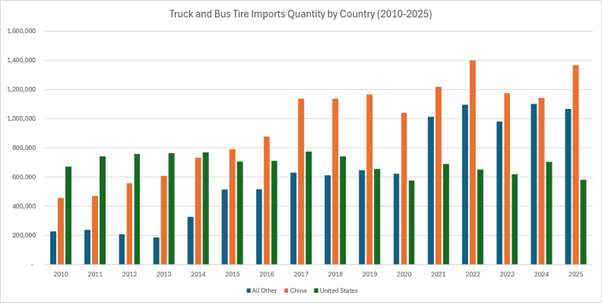
Domestic producers
[64] According to the complainants, Michelin Canada and the supporting CRMA members represent the majority of domestic production of like goods in Canada, with the remaining domestic production attributed to other TBT retreaders.Footnote 10 Based on information provided in the complaint and its own research, the CBSA sent Standing RFIs to 31 potential producers of like goods in Canada to determine whether they produce like goods and to obtain data for the purposes of determining standing. The questionnaires were sent to the potential producers on the same day the CBSA determined that the complaint was properly documented.
[65] Of the 31 companies contacted, seven replied to the CBSA, which includes the five from the previously mentioned supporting producers.
Estimates of domestic production
[66] The complainants estimated that its own production represents over 50% of the total domestic production of like goods, with the remaining domestic production attributed to like goods produced by other retreaders. The complainants stated that Michelin is the only manufacturer of new TBT in Canada and provided its own specific production figures for Michelin and the participating CRMA members. The complainants also states that many of the other retreaders are small, single-shop operators and provided an estimate of the total production volume of like goods for these retreaders.Footnote 11
[67] Based on the information in the complaint and the data provided by respondents to the CBSA’s Standing RFI, the complainants accounted for the majority of the production of TBT in Canada in 2025 and in the first quarter of 2026.
Standing
[68] Pursuant to subsection 31(2) of SIMA, the following conditions must be met in order for an investigation to be initiated:
- the complaint is supported by domestic producers whose production represents more than 50% of the total production of like goods by those domestic producers who express either support for or opposition to the complaint and
- the production of the domestic producers who support the complaint represents 25% or more of the total production of like goods by the domestic industry
[69] Based on an analysis of information provided in the complaint, as well as the information gathered by the CBSA, the CBSA is satisfied that the standing requirements of subsection 31(2) of SIMA have been met.
The Canadian market
[70] The complainants, using Statistics Canada import data,Footnote 12 estimated the total volume and value of imports, under the tariff classification numbers listed in the complaint, from China, the U.S., and all other countries for the period from January 1, 2010, through April 2026. The complainants’ analysis compared the import volumes and values of TBT from January 1, 2022 to March 31, 2026.Footnote 13
[71] The CBSA conducted its own independent review of imports of TBT from the CBSA’s Electronic Facility Information Retrieval Management (eFIRM) database and the CBSA Assessment and Revenue Management (CARM) system using the tariff classification numbers under which the subject goods are imported from China, the U.S., and all other countries. In addition, the CBSA reviewed its Accelerated Commercial Release Operations Support System (ACROSS) data to correct any errors and remove non-subject imports.
[72] Detailed information regarding the sales from domestic production by the complainants, as well as the volume of imports of subject goods, cannot be divulged for confidentiality reasons. The CBSA, however, has prepared the following table to show the estimated import share of subject goods in Canada.
| Country | 2022 | 2023 | 2024 | 2025 | Q1 2026 |
|---|---|---|---|---|---|
| China | 51.3% | 50.6% | 39.6% | 44.6% | 48.9% |
| U.S. | 19.3% | 16.9% | 22.0% | 18.7% | 15.9% |
| Other | 29.4% | 32.5% | 38.4% | 36.7% | 35.3% |
| Total | 100% | 100% | 100% | 100% | 100% |
| The annual figures in this table may not equal to 100% due to rounding errors. | |||||
[73] The CBSA will continue to gather and analyze information on the volume and value of imports during the period of investigation (POI), from April 1, 2025 to March 31, 2026, as part of the preliminary phase of the dumping and subsidy investigations and will refine these estimates.
Evidence of dumping
[74] The complainants alleged that the subject goods from China have been injuriously dumped into Canada. Dumping occurs when the normal value of the goods exceeds the export price to importers in Canada.
[75] Normal values are generally based on the domestic selling price of like goods in the country of export where competitive market conditions exist or as the aggregate of the cost of production of the goods, a reasonable amount for administrative, selling and all other costs, and a reasonable amount for profits.
[76] The complainants made the allegations that the TBT sector in China may not be operating under competitive market conditions and as such, the domestic market for TBT may not be relied upon for the purpose of determining normal values. Accordingly, the complainants submitted that normal values should be determined under section 20 of SIMA.
[77] The export price of goods sold to importers in Canada is generally the lesser of the exporter’s selling price and the importer’s purchase price, less all costs, charges and expenses resulting from the exportation of the goods.
[78] To ensure that the estimated margins of dumping incorporated a reasonable product mix and were representative of the overall range of subject imports, estimates were conducted for five benchmark products, which were selected as they are the most common TBT models in the market: 11R22.5; 11R24.5; 255/70R22.5; 295/75R22.5; and 455/55R22.5.
[79] Estimates of normal values and export prices by both the complainants and the CBSA are discussed below.
[80] The complainants calculated margins of dumping for the period of January 1, 2025 to December 31, 2025. The information provided by the complainants, combined with the CBSA’s own import data, enabled the CBSA to calculate normal values and export prices for the POI.
Section 20 allegations
[81] Section 20 is a provision of SIMA that may be applied to determine the normal value of goods in a dumping investigation where certain conditions prevail in the domestic market of the exporting country. In the case of a prescribed country under paragraph 20(1)(a) of SIMA, it is applied where, in the opinion of the CBSA, the government of that country substantially determines domestic prices and there is sufficient reason to believe that the domestic prices are not substantially the same as they would be in a competitive market.Footnote 14
[82] The CBSA initiates dumping investigations on the presumption that section 20 is not applicable to the sector under investigation, unless there is information that suggests otherwise.
[83] A section 20 inquiry refers to the process whereby the CBSA collects information from various sources in order to form an opinion as to whether the conditions described under subsection 20(1) of SIMA exist with respect to the sector under investigation. Before initiating an inquiry under section 20, the CBSA must first analyze the information submitted in the complaint and the evidence it has gathered independently to determine if it is sufficient to warrant the initiation of an inquiry.
[84] The complainants allege that the conditions described in section 20 of SIMA prevail in the tire sector in China. That is, the complainants allege that this industry sector in China does not operate under competitive market conditions and consequently, the domestic prices of TBT established in China would not be reliable for determining normal values. The complainants submitted that the tires sector is the relevant sector for a section 20 analysis, as it encompasses the production of TBT (i.e., the subject goods).
[85] In support of their allegations, the complainants provided evidence of state ownership and control of major producers in the tire sector and associated industries; government plans, policies and directives impacting the tire sector and associated industries; the role of industry associations as a tool of government control; systemic and sectoral distortions in China, including with respect to electricity and fossil fuel production; government intervention in the cost of production of raw material inputs, notably synthetic and natural rubber and steel; and extensive financial supports and subsidization of TBT producers. The complainants also provided pricing data comparing Chinese domestic prices of key input materials (carbon black, steel wire rod, and natural rubber) and TBT with prices from market-economy sources.
[86] The information provided by the complainants suggests a level of government influence in the tire sector, including TBT. The complainants allege that the market distortions and cost advantages provided to Chinese carbon black, steel wire rod, natural and synthetic rubber, and related inputs translate directly into distortions to the prices of the subject goods in China.
[87] For purposes of the section 20 analysis, the CBSA considers the tire sector to be the relevant sector. The CBSA has reviewed the information provided in the complaint and conducted its own research. Based on this information, the CBSA believes that there is reasonable evidence to support an inquiry into the allegations that the measures taken by the Government of China substantially influence prices in the tire sector in China, and that the prices are substantially different than they would be in a competitive market.
[88] Consequently, on August 31, 2026, the CBSA included in its investigation a section 20 inquiry in order to determine whether the conditions set forth in paragraph 20(1)(a) of SIMA prevail in the tires sector in China.
[89] As part of this section 20 inquiry, the CBSA sent Section 20 RFIs to all potential producers and exporters of TBT in China, as well as to the Government of China, requesting detailed information related to the tires sector in China.
[90] In cases where conditions of section 20 exist, pursuant to paragraph 20(1)(c), the normal value can be determined based on profitable selling prices or full costs of production and an amount for profit on goods sold domestically in a surrogate country, to which the conditions described in section 20 of SIMA are not applicable.
[91] For the purposes of obtaining information necessary to calculate normal values, pursuant to subparagraph 20(1)(c) of SIMA, the CBSA requested information from producers in a surrogate country. The CBSA has selected the U.S. as the primary potential surrogate country and has sent questionnaires to known producers of TBT in that country.
[92] Additional market-economy countries with significant production or exports of like goods may also be considered as potential surrogates. In the event that the CBSA does not receive sufficient information from producers in the selected surrogate country for the purposes of determining normal values pursuant to section 20, the CBSA may identify other surrogate countries at a later date.
[93] Importers will be requested to provide information on sales of like goods produced in the surrogate countries, in the event that normal values must be determined under paragraph 20(1)(d) of SIMA.
[94] In the event that the CBSA forms an opinion that domestic prices of TBT in China are substantially determined by the government, and there is sufficient reason to believe that the domestic prices are not substantially the same as they would be if they were determined in a competitive market, the normal values of the goods under investigation will be determined, pursuant to paragraph 20(1)(c) or 20(1)(d) of SIMA, where such information is available.
[95] Normal values determined pursuant to paragraph 20(1)(c) of SIMA are determined on the basis of the domestic selling prices or the aggregate of the cost of production, a reasonable amount for administrative, selling, and all other costs, and a reasonable amount for profits of like goods sold by producers in any country designated by the CBSA and adjusted for price comparability.
[96] Normal values determined in accordance with paragraph 20(1)(d) of SIMA are determined on the basis of the selling price in Canada of like goods produced and imported from any country designated by the CBSA and adjusted for price comparability.
Normal value
Complainant’s estimates of normal value
Section 15
[97] The complainants stated that sufficient information was not available to estimate normal values pursuant to section 15 of SIMA. As a result, the complainants were unable to estimate normal values on the basis of section 15 of SIMA.Footnote 15
Section 19(b)
[98] The complainants estimated normal values using a constructed cost approach based on the methodology in paragraph 19(b) of SIMA, calculated based on the aggregate of estimates of the cost of production of the subject goods, a reasonable amount for administrative, selling and other costs and a reasonable amount for profits.
[99] As detailed costs of production of TBT producers in China were not available, the complainants estimated the costs of production of TBT in China using:
- a combination of a proportional breakdown of public index pricing for raw materials with Michelin’s raw material costs, which consist of rubber, metallic reinforcement materials, fillers and chemicals for vulcanization and protection (direct material)Footnote 16
- Direct and indirect labour costs from Michelin, adjusted to reflect the difference between manufacturing wages in Canada and ChinaFootnote 17 and
- Michelin’s factory overhead costsFootnote 18
[100] To estimate a reasonable amount for administrative, selling and other costs, and a reasonable amount for profits for the subject goods from China, the complainants relied on the publicly available financial results of Sailun Group Co. Ltd., Shandong Linglong Tyre Co. Ltd., and Aeolus Tire Co. Ltd., three producers of TBT with factories in China. Using this information, the complainants estimated a reasonable amount for administrative, selling and other costs; financial expenses; and profits as a percentage of the costs of production for 2025.Footnote 19
Section 20
[101] While the complainants alleged that section 20 conditions exist is China’s tire sector, the complainants did not provide an estimate of normal values in accordance with section 20 of SIMA.
CBSA’s estimate of normal value
[102] The CBSA reviewed the complainants arguments pertaining to Chinese TBT pricing and agrees that there is insufficient information available to reasonably estimate normal values pursuant to section 15 of SIMA. In conducting it’s own research, the CBSA was unable to obtain other pricing information that would be appropriate to use for this purpose. Therefore the CBSA is unable to estimate normal values following the methodology described in section 15 of SIMA.
[103] For the purposes of initiation, the CBSA estimated normal values using a constructed cost approach based on the methodology of paragraph 19(b) of SIMA, calculated based on the aggregate of the estimated cost of production of the goods, a reasonable amount for administrative, selling and other costs, and a reasonable amount for profits. The CBSA reviewed the complainant’s methodology to determine how normal values were estimated and found that the approach was reasonable.
[104] The CBSA acknowledges that there is reasonable indication that the conditions of section 20 may exist in the tire sector in China. As detailed in the preceding section, the CBSA has initiated a section 20 inquiry into the tire sector in China. Information gathered from the inquiry will enable the CBSA to form an opinion on whether section 20 conditions exist in China’s tire sector and, if warranted, to determine dumping margins using information from surrogate producers.
Export price
Complainants’ estimates of export price
[105] The complainants estimated export prices based on Statistics Canada quarterly import data for TBT during the period of review. The complainants assume that the declared customs values in the data represent ex-works selling prices in accordance with standard customs valuation principles. Therefore, no adjustments were made to remove transportation costs.Footnote 20
CBSA’s estimates of export price
[106] In order to estimate the export price for the subject goods imported into Canada, the CBSA used information available through CARM, eFIRM, and ACROSS. The CBSA was able to obtain sufficient information on importations of Chinese TBT and used this information to estimate export prices.
Estimated margins of dumping
[107] For the purposes of the initiation of the investigation, as previously mentioned, the CBSA has estimated a margin of dumping using normal values based on the methodology of paragraph 19(b) of SIMA.
[108] The CBSA estimated the margin of dumping for the subject goods by comparing the estimated weighted-average normal values with the estimated weighted-average export prices for five benchmark products, over the period of April 1, 2025 to March 31, 2026.
[109] The CBSA estimates that subject goods from China were dumped by 29.1%, expressed as a percentage of the export price. As such, sufficient evidence is available to support the allegations that subject goods originating in or exported from China have been dumped.
Evidence of subsidy
[110] In accordance with section 2 of SIMA, a subsidy exists where there is a financial contribution by a government of a country other than Canada that confers a benefit on persons engaged in the production, manufacture, growth, processing, purchase, distribution, transportation, sale, export or import of goods. A subsidy also exists in respect of any form of income or price support within the meaning of Article XVI of the General Agreement on Tariffs and Trade, 1994, being part of Annex 1A to the World Trade Organization (WTO) Agreement that confers a benefit.
[111] Pursuant to subsection 2(1.6) of SIMA, a financial contribution exists where:
- practices of the government involve the direct transfer of funds or liabilities or the contingent transfer of funds or liabilities
- amounts that would otherwise be owing and due to the government are exempted or deducted or amounts that are owing and due to the government are forgiven or not collected
- the government provides goods or services, other than general governmental infrastructure, or purchases goods or
- the government permits or directs a non-governmental body to do anything referred to in any of paragraphs (a) to (c) above where the right or obligation to do the thing is normally vested in the government and the manner in which the non-governmental body does the thing does not differ in a meaningful way from the manner in which the government would do it
[112] A state-owned enterprise (SOE) may be considered to constitute “government” for the purposes of subsection 2(1.6) of SIMA if it possesses, exercises, or is vested with, governmental authority. Without limiting the generality of the foregoing, the CBSA may consider the following factors as indicative of whether the SOE meets this standard: 1) the SOE is granted or vested with authority by statute; 2) the SOE is performing a government function; 3) the SOE is meaningfully controlled by the government; or 4) some combination thereof.
[113] If a subsidy is found to exist, it may be subject to countervailing measures if it is specific. A subsidy is considered to be specific when it is limited, in law or in fact, to a particular enterprise or is a prohibited subsidy. An “enterprise” is defined under SIMA as also including a “group of enterprises, an industry and a group of industries”. Any subsidy which is contingent, in whole or in part, on export performance or on the use of goods that are produced or that originate in the country of export is considered to be a prohibited subsidy and is, therefore, specific according to subsection 2(7.2) of SIMA for the purposes of a subsidy investigation.
[114] In accordance with subsection 2(7.3) of SIMA, notwithstanding that a subsidy is not specific in law, a subsidy may also be considered specific in fact, having regard as to whether:
- there is exclusive use of the subsidy by a limited number of enterprises
- there is predominant use of the subsidy by a particular enterprise
- disproportionately large amounts of the subsidy are granted to a limited number of enterprises and
- the manner in which discretion is exercised by the granting authority indicates that the subsidy is not generally available
[115] For purposes of a subsidy investigation, the CBSA refers to a subsidy that has been found to be specific as an “actionable subsidy”, meaning that it is countervailable.
Subsidy programs in China
[116] In alleging that actionable subsidies were applicable to the subject goods imported from China, the complainants relied on previous CBSA subsidy investigation findings on various consumer products and other investigative authorities’ investigations into TBT. The complainants also relied on publications issued by the World Trade Organization (WTO) and other publications.
[117] In particular, the complainants alleged that the Government of China provides substantial subsidies to its tire industry, such as cash grants, preferential financing, special tax rebates, VAT and tariff exemptions, land-use rights, discounted inputs and discounted utilities.
[118] The complainants argued that the numerous recent findings from other investigative authorities that Chinese TBT were subsidized provided strong evidence that such producers continued to receive subsidization. In support of their position, the complainants referenced and cited four subsidy determinations issued by authorities in other jurisdictions concerning Chinese TBT.Footnote 21
[119] The complainants identified numerous potential subsidy programs that producers and exporters of TBT in China may have benefitted from. The complainants listed several grant and grant equivalent programs, preferential financing programs, preferential tax programs, relief from duties and taxes, provisions offered at less than adequate remuneration programs, and grants and tax relief related to preferential economic development zones and other types of programs. The most common support provided by the complainants consists of information from determinations and sunset reviews in other jurisdictions of TBT. The complainants also relied on past CBSA findings, and China’s most recent notification of active subsidy programs to the WTO in 2025.
[120] The complainants alleged that these subsidy programs are actionable and/or countervailable and that the subsidies are neither negligible nor insignificant. The complainants also claimed that the programs are either used by or are available for use by producers and exporters of TBT in China. The complainants also alleged, with support, that there are various Chinese producers and exporters of TBT that operate in special economic zones, giving them access to numerous subsidy programs and preferential treatment.Footnote 22
[121] As a result, based on the information available, the CBSA identified 50 potentially actionable subsidy programs that may have benefited Chinese producers/exporters of TBT. These programs have been grouped into the following four categories:
- Grants and grant equivalents
- Preferential financing
- Taxation and tariff reduction programs and
- Government provision of goods and services for less than adequate remuneration
[122] The CBSA’s analysis revealed that the alleged subsidy programs constitute potential financial contributions by the Government of China that may have conferred benefits to producers/exporters of TBT. In addition, the programs were further examined and were considered to be potentially specific either in law or in fact within the meaning of subsections 2(7.2) and 2(7.3) of SIMA.
[123] The list of the identified programs to be investigated are found in the Subsidy RFI.
[124] If more information becomes available during the investigation process that indicates that some exporters/producers of subject goods may have benefited from any other programs during the POI, the CBSA will request complete information from the Government of China and exporters/producers of subject goods to pursue the investigation of these programs.
CBSA’s subsidy conclusion
[125] Sufficient evidence is available to support the allegations that TBT originating in or exported from China have been subsidized. In investigating these programs, the CBSA has requested information from the Government of China, exporters and producers to determine whether exporters/producers of subject goods received benefits under these programs and whether these programs, or any other programs, are actionable subsidies and, therefore, countervailable under SIMA.
Estimated amount of subsidy
[126] The complainants were unable to estimate the amounts of subsidy on a program basis for the subject goods imported from China. Instead, the complainants estimated the amount of subsidy as being the difference between the weighted average export prices and the cost of production and comparing these results to the export prices. Using this methodology, the amount of subsidy was estimated to be between 12.9% and 58.4%.
[127] It is the CBSA’s understanding that subsidies have the effect of lowering the full cost of the goods, including the cost of production and the amount for selling, administrative and all other costs, which allows exporters to pass-through the subsidy benefits in reducing the selling price of those goods to Canada. Therefore, the CBSA is satisfied that the exporter’s ability to sell subject goods to Canada at prices substantially below their estimated full costs supports the complainants’ allegations that subsidies are being conferred on the exported goods.
[128] The CBSA estimated the amount of subsidy conferred to exporters of the subject goods from China by comparing the estimated full costs of the subject goods with their estimated export prices, using the costing and export price methodologies explained in the evidence of dumping section.
[129] The CBSA’s analysis of the information indicates that subject goods imported into Canada, during the period of April 1, 2025 to March 31, 2026, were subsidized and that the estimated amount of subsidy is 23.9% of the export price.
Evidence of injury
[130] The complainants allege that the subject goods have been dumped and subsidized and that such dumping and subsidizing have caused and are threatening to cause material injury to the TBT industry in Canada. In support of its injury allegations, the complainants provided evidence of:
- Increased volume of imports of subject goods
- Price undercutting and price suppression
- Lost sales, decline in revenues, and downstream price effects
- Loss of volume and market share
- Decline in production levels and capacity utilization
- Decline in employment and productivity
- Decline in financial performance and profitability and
- Decline in return on investment
Increased volume of imports of subject goods
[131] The complainants allege that imports of subject goods have significantly increased relative to domestic industry sales and production, despite imports of subject goods having declined from 2022 to 2025 and had a marginal increase in the first quarter of 2026 over the first quarter of 2025.
[132] The complainants provided the estimated imports of TBT under tariff classification number 4011.20.00.13, 4011.20.00.19, and 4012.12.00.00 from 2022 to the first quarter of 2026, using import data obtained from Statistics Canada. The statistics were compared to estimated domestic production and domestic sales from domestic production of like goods
[133] Based on the Statistics Canada import data, the volume of imports of subject goods have decreased in absolute terms, on a unit (tire) basis, by 2.4% between 2022 to 2025. However, the complainants noted a 19.7% increase in imports of subject goods from 2024 to 2025, and an increase of 7.2% in the first quarter of 2026 over the first quarter of 2025. Meanwhile, the complainants’ domestic production and sales from domestic production both declined in absolute terms from 2024 to 2025, and in the first quarter of 2026 over the first quarter of 2025.
[134] The complainants also submitted import volumes from 2010 to 2025, to demonstrate the increase in imports of subject goods over a longer period, as seen in the chart provided in the figure below, having nearly tripled since 2010.Footnote 23
Figure 2: Import volume trends for bus and truck tires (2010-2025)Footnote 24
[135] While absolute volumes of subject imports declined from 2022 to 2025, their volume relative to domestic production and sales increased significantly. As discussed previously, domestic production and sales of like goods experienced continuous declines over this same period. Consequently, the complainants demonstrated that subject imports captured a dramatically larger relative share compared to domestic sales and production from 2022 to 2025.Footnote 25
[136] The CBSA revised the market table using its own eFIRM data and responses from Canadian producers to the CBSA’s Standing RFI. From this information, the CBSA observes a similar trend, in that the subject goods have regained volumes in 2025 and Q1 of 2026 while the complainants had experienced a steady decrease in sales volumes. Although the percentage differences differ from those presented by the complainants, the same conclusions can be drawn from both sets of data.
[137] Based on the above, the CBSA finds the complainants’ claim of increased import volumes to be reasonably supported. The increase was especially pronounced in absolute terms in 2025 and in the first quarter of 2026, over the first quarter of 2025. However, the increase in import volume of subject goods in relative terms is even more distinct when compared to the domestic production and domestic sales from domestic production of like goods.
[138] The CBSA finds that the injury factor of an increased volume of subject goods is sufficiently supported and linked to the allegedly dumped and subsidized goods.
Price undercutting and price suppression
Price undercutting
[139] The complainants argue that subject imports have undercut the pricing of domestically-produced like goods, resulting in price depression, which further lead to other injury factors described in the proceeding sections. In support of their claim, the complainants presented analysis of various data points as well as account-specific examples.
[140] First, the complainants explain that, based on Kal Tire’s market study in 2021, commercial fleet operators identified increased costs and margin pressures as their top business challenge, that price was identified as one of the primary reasons for choosing one tire supplier over another, and that a high degree of price elasticity exists in the TBT market in Canada.Footnote 26 Michelin explained that there "may be differences among suppliers with respect to brand, service, and warranty, those factors do not change the fact that price is the principal factor driving purchasing decisions in a price sensitive market…”Footnote 27
[141] The complainants’ data demonstrated that the average unit values of imports are significantly lower than like goods. However, the complainants also acknowledged that the average unit values are not the best metric to base conclusions on, without having more detailed import statistics, as various tiers of tires exist with a wide spread in prices. Nonetheless, the complainants demonstrated that, based on the data available from Statistics Canada, subject imports have increasingly undercut the complainants' prices. The complainants further noted that the subject imports have also undercut the price of all other imports.Footnote 28
[142] The complainants pointed out that subject import prices decreased between 2022 and 2025, despite the fact that there was significant inflation on the core raw materials for tires in this period and in the cost of rubber.
| Year | China unit price (CAD) | % change year-over-year (YoY) | Natural rubber CAD per kg: NE Asia | % change YoY | Styrene-Butadiene rubber CAD per kg: NE Asia | % change YoY |
|---|---|---|---|---|---|---|
| 2022 | $181 | N/A | $2.48 | N/A | $2.36 | N/A |
| 2023 | $174 | -4% | $2.34 | -6% | $2.28 | -4% |
| 2024 | $156 | -10% | $2.96 | 26% | $2.68 | 18% |
| 2025 | $154 | -1% | $3.05 | 3% | $2.49 | -7% |
| Total change (2022 to 2025) | -15% | 23% | 6% |
[143] The above table showed the cost of natural rubber in Northeast Asia increased 26% from 2022 to 2025, while the prices of imported subject goods had decreased 15%.Footnote 29 The complainants also compared the prices of imported subject goods to their own cost of goods manufactured (COGM), which also demonstrated a growing gap.
Price suppression
[144] The complainants explained that production and material costs for TBTs increased significantly, but because of the low priced subject imports, they have been unable to raise their prices by a sufficient amount to account for these increases in cost. Between 2022 and 2025, the complainants saw their COGM and their cost of goods sold (COGS) increase, while they were only able to increase their selling prices by a marginal amount.Footnote 30 Their costing had increased during the same period, resulting in both their COGM and COGS, as a percentage of sales, rising between 2022 and 2025.
[145] The major concern for the complainants lies with the increase in labour and overhead costs, due to the fixed portions accounting for a significant amount of the overall expenses.Footnote 31 The increase in low-priced subject imports "suppress domestic sales volumes or prevent domestic producers from achieving price increases necessary to maintain throughput at profitable levels”, thus “fixed costs are spread over fewer units thereby increasing the unit cost of production.”Footnote 32 This has caused the complainants to either accept lower margins in order to maintain sufficient production volume or risk further cost escalation on a per-unit basis.
[146] Based on the information contained in the complaint, as well as the analysis above, the CBSA finds the claims of price undercutting and price suppression to be well-supported and sufficiently linked to the allegedly dumped and subsidized goods. The CBSA noted several small numerical discrepancies between the narrative and the tables presented in the narrative of the complaint. However, the discrepancies are minor, and still draw the same conclusions of injury presented by the complainants.
Lost sales, decline in revenues, and downstream price effects
[147] The complainants provided examples of lost sales, instances of price erosion and price suppression, and how these lead to future declines in revenues, specifically for the CRMA members.
[148] As the complainants explain, “retreaders may experience injury to their overall business in a number of ways, not all of which is injury to domestic production of like goods since the retreaders do not produce new tires and do not exclusively sell domestically produced new tires…”Footnote 33 However, the loss of a sale or a retreaded tire to a Chinese tire is direct injury to domestic production of like goods.
[149] Kal Tire provided records of lost sales to subject goods since 2023, which had a direct impact on their revenue and to the industry, and provided several specific examples with customer names and prices offered.Footnote 34 The downstream effect is the loss of future revenue from retreading for tires not sold.
[150] In order to retain key customer accounts, Kal Tire implemented promotional programs to compete with sales from competing suppliers, attributing to a decline in revenues.Footnote 35
[151] Pneus Metro also provided that they lost sales to imported subject goods in 2024 and 2025.Footnote 36 Additionally, Pneus Metro also provided internal intelligence on prices of subject goods compared to their own prices, demonstrating lost sales.Footnote 37
[152] Michelin provided several specific accounts of lost and declining sales to certain key accounts, attributing to a significant loss of revenue. They attribute the losses to low-priced subject goods, with some customers confirming that they have switched to imported tires.Footnote 38
[153] Based on the information contained in the complaint, as well as the analysis above, the CBSA finds the claims of lost sales, price suppression and declining revenues to be well supported and sufficiently linked to the allegedly dumped and subsidized goods.
Loss of volume and market share
[154] The complainants state that, between 2022 and 2025, their sales declined in terms of units sold, and that the Canadian industry as a whole is estimated to have fallen by the same amount. For Q1 of 2025 versus Q1 of 2026, the same trend can be observed, where the complainants’ sales, and sales of the Canadian industry as a whole, decreased. During the same period, imports of subject goods fell by a much smaller amount, which clearly demonstrates decreasing sales, as well as a decrease in market share vis-a-vis the subject goods.Footnote 39
[155] The estimated market share table provided by the complainants shows domestic sales from domestic production declined from 2022 to 2025. During the same period, imports of subject goods fell by only 2.5%, which demonstrates decreasing sales, as well as a decrease in market share vis-a-vis the subject goods. The Canadian industry as a whole suffered a loss in market share from 2022 and 2025, largely attributed to the increase in market share from 28% to 31% of imports of subject goods (and the balance attributed to imports of like goods from other countries).Footnote 40
[156] The complainants analyzed data on retreads produced and sold in Canada steadily declining since 2009.Footnote 41 Based on their estimates of the Canadian market for retreads, the data shows a year over year decline in percentage of volume of retreads from 2022 to 2025.Footnote 42
[157] Michelin analyzed data on domestic sales of its own production of new tires and concluded that their sales decline from 2022 to 2025 in the number of units, and suffered a greater total loss had it maintained their 2022 volumes.Footnote 43 They also experienced a decline in volume in Q1 of 2026 over Q1 of 2025.
[158] Examining the CBSA estimated volumes, the data shows that complainants and Canadian producers lost part of their share of the Canadian market. Meanwhile, the gains in market share of the goods imported from China from 2022 to 2025 were minimal, diminishing the causal link between the market share loss being attributed to the subject imports. However, the increase in volumes imported from 2024 to 2025 is drastic, and is cause for consideration. Based on the above, the CBSA finds that the injury factor of declining volumes and market share are sufficiently supported and linked to the allegedly dumped and subsidized goods.
Decline in production levels and capacity utilization
[159] The complainants stated that their domestic sales from domestic production fell between 2022 and 2025, and production for the Canadian market likewise fell as the complainants reduced their production volume in light of the sales decline discussed in the previous section of this report.Footnote 44 Lower production also resulted in increased excess capacity, with utilization for domestic sales from domestic production falling from 2022 to 2025. The same occurred in Q1 2025 over Q1 2026, with utilization for domestic sales from domestic production falling.Footnote 45
[160] The complainants could not rely on export sales or products produced on the same equipment to mitigate the impact of this reduced production and increased excess capacity. For retreaders, no products other than retreaded tires can be produced on retreading equipment, and there is no market demand in Canada for retreads in other categories.Footnote 46
[161] The CBSA finds the complainants’ claims of a decline in production levels and capacity utilization to be reasonable and well supported. As such, the CBSA is of the opinion that these injury factors are sufficiently supported and linked to the allegedly dumped and subsidized goods.
Decline in employment and productivity
[162] The complainants stated that one of the most significant impacts has been on the people employed at their tire manufacturing operations. As a direct result of declining sales, production, and capacity utilization, the complainants saw their total average number of employees as well as their average productivity level fall. Both of these factors were also in decline in the interim period of Q1 2025 over Q1 2026.Footnote 47
[163] In the case of Kal Tire, employees have also been affected due to retreading plant closures, which they attribute to the growing presence of subject imports.Footnote 48
[164] The CBSA finds the complainants’ claims of a decline in employment and productivity to be reasonable and well-supported. As such, the CBSA is of the opinion that these injury factors are sufficiently supported and linked to the allegedly dumped and subsidized goods.
Decline in financial performance and profitability
[165] The complainants stated that from 2022 through to 2025, competition with the subject imports have caused not only loss of sales volume but also caused a significant reduction in profitability, both in absolute profit dollar terms and as a percent of revenue.Footnote 49
[166] As seen in the preceding sections, the largest volume of subject goods imported during the analysis period came in 2022, which had an impact on the Canadian market, and on the complainants’ profitability. The complainants saw their net income levels decline from 2022 to 2025. Gross margins also worsened during the same period, as the complainants suffered from lost volume, price suppression, and mounting costs.Footnote 50
[167] Overall, the complainants suffered a loss in sales volumes between 2022 and 2025, caused by the pricing pressures and volume of subject goods imports. Their average COGS rose on a per unit basis during that period, while their average selling price per unit rose by a lesser amount in that period.Footnote 51
[168] As a result, Michelin shifted its focus to higher-value TBT in an effort to regain some of its lost revenue. However, Michelin explained that in addition to these tires incurring higher material costs, the lower sales volume resulted in higher production costs overall as more fixed costs had be allocated to their production. Quoting Mr. Mutch, the complainants explain how “[i]n particular, new [TBT] producers incur a substantial amount of research and development expenses to provide innovative products to Canadian customers in a competitive product landscape. [TBT] producers need to generate sufficient profit to sustain these vital sales and innovation activities or else face declining returns. Further, as the Complainants need to expend more on achieving sales in the Canadian market, SG&A expenses increase both relative to the selling prices and on a $/unit basis in the face of falling volumes.”Footnote 52 Retreaders' overall firm net profit margins also dropped since 2022.Footnote 53
[169] The complainants performed analysis to demonstrate what their sales and total profits would have been had they been able to maintain the same sales volume as in the base year 2022, which demonstrated that had they maintained their 2022 sales volumes, they would resulted in additional profits.Footnote 54
[170] The complainants further performed the same analysis to demonstrate what their sales and total profits would have been had they been able to maintain the same market share as in the base year 2022, which demonstrated that had they maintained their 2022 market share, they would resulted in additional profits.Footnote 55
[171] The CBSA finds the complainants’ claims of declined financial performance and profitability to be reasonable and well-supported. As such, the CBSA is of the opinion that these injury factors are sufficiently supported and linked to the allegedly dumped and subsidized goods.
Decline in return on investment
[172] The complainants stated that return on investments has been negatively impacted by the price and volume effects of the subject goods in the Canadian Market.
[173] The complainants provided specific examples of the decline in their invested capitals, and lowered returns on investments.Footnote 56
[174] In the case of retreaders in general, the CBSA finds the complainants’ claims of declined in return on investment to be reasonable and well-supported. As such, the CBSA is of the opinion that these injury factors are sufficiently supported and linked to the allegedly dumped and subsidized goods. With respect to Michelin, the CBSA is of the opinion that these injury factors lend more to the threat of injury, but find it sufficiently supported and linked to the allegedly dumped and subsidized goods.
CBSA’s injury conclusion
[175] Overall, based on the evidence provided in the complaint, and supplementary data available to the CBSA through its own research and customs documentation, the CBSA finds that the evidence discloses a reasonable indication that the dumping and subsidizing of the subject goods from China, have caused injury to the TBT industry in Canada in the form of:
- increased volume of imports of subject goods
- price undercutting and price suppression
- lost sales, decline in revenues, and downstream price effects
- loss of volume and market share
- decline in production levels and capacity utilization
- decline in employment and productivity
- decline in financial performance and profitability and
- decline in return on investment
Threat of injury
[176] The complainants has listed several factors as indications that the alleged dumping and subsidizing of subject goods threatens to injure the domestic industry.Footnote 57 These factors are:
- Domestic and international market conditions
- Declining demand for TBT in China will encourage further Chinese exports to Canada
- Declining demand for Chinese TBT from China in global markets will increase exports of Chinese tires to Canada
- Canada will remain an attractive market for subject imports in face of trade remedies in place for like goods in the European Union and the U.S.
- Likelihood of substantially increased subject import volumes into Canada
- Chinese producers are export oriented
- Chinese producers have significant freely disposable capacity
- Conditions in the markets in the European Union and Unites States
- Dumped and subsidized subject imports are likely to have significant adverse price effects
- The subject goods can undercut the domestic industry by greater margins
- Subject goods are likely to cause price suppression as input costs rise
- The subject goods will likely adversely impact the domestic industry
[177] In light of the CBSA’s finding that there is a reasonable indication that the dumping and subsidizing of the subject goods has caused injury, the CBSA will exercise administrative efficiency and not address whether there is a reasonable indication that the dumping and subsidizing of the subject goods is threatening to cause injury.
Scope of the investigations
[178] The CBSA is conducting investigations to determine whether the subject goods have been dumped and/or subsidized.
[179] The CBSA has requested information from all potential exporters and importers whose contact information was identified to determine whether or not subject goods imported into Canada during the POI of April 1, 2025 to March 31, 2026, were dumped and/or subsidized. The information requested will be used to determine the normal values, export prices, and margins of dumping, if any. The CBSA also requested information from the Government of China with respect to the possibility that the conditions of section 20 of SIMA exist in the tire sector in China.
[180] The CBSA has also requested information from the Government of China and all potential producers/exporters to determine whether or not subject goods imported into Canada during the POI of April 1, 2025 to March 31, 2026, were subsidized. The information requested will be used to determine the amounts of subsidy, if any.
[181] All parties have been clearly advised of the CBSA’s information requirements and the time frames for providing their responses.
Future action
[182] The CITT will conduct a preliminary inquiry to determine whether the evidence discloses a reasonable indication that the alleged dumping and subsidizing of the goods has caused or is threatening to cause injury to the Canadian industry. The CITT must make its decision on or before the 60th day after the date of the initiation of the investigations. If the CITT concludes that the evidence does not disclose a reasonable indication of injury to the Canadian industry, the investigations will be terminated.
[183] If the CITT finds that the evidence discloses a reasonable indication of injury to the Canadian industry and the CBSA’s preliminary investigation reveals that the goods have been dumped and/or subsidized, the CBSA will make a preliminary determination of dumping and/or subsidizing within 90 days after the date of the initiation of the investigations, by November 30, 2026. Where circumstances warrant, this period may be extended to 135 days from the date of the initiation of the investigations.
[184] Under section 35 of SIMA, if, at any time before making a preliminary determination, the CBSA is satisfied that the volume of goods of a country is negligible, the investigations will be terminated with respect to goods of that country.
[185] Imports of subject goods released by the CBSA on and after the date of a preliminary determination of dumping and/or subsidizing, other than goods of the same description as goods in respect of which a determination was made that the margin of dumping of, or the amount of subsidy on, the goods is insignificant, may be subject to provisional duty in an amount not greater than the estimated margin of dumping and/or the estimated amount of subsidy on the imported goods.
[186] Should the CBSA make a preliminary determination of dumping and/or subsidizing, the investigations will be continued for the purpose of making a final decision within 90 days after the date of the preliminary determinations.
[187] After the preliminary determinations, if, in respect of goods of a particular exporter, the CBSA’s investigations reveal that imports of the subject goods from that exporter have not been dumped or subsidized, or that the margin of dumping or amount of subsidy is insignificant, the investigation(s) will be terminated in respect of those goods.
[188] If final determinations of dumping and/or subsidizing are made, the CITT will continue its inquiry and hold public hearings into the question of material injury to the Canadian industry. The CITT is required to make a finding with respect to the goods to which the final determinations of dumping and/or subsidizing apply, not later than 120 days after the CBSA’s preliminary determinations.
[189] In the event of an injury finding by the CITT, imports of subject goods released by the CBSA after that date will be subject to anti-dumping duty equal to the applicable margin of dumping and countervailing duty equal to the amount of subsidy on the imported goods. Should both anti-dumping and countervailing duties be applicable to subject goods, the amount of any anti-dumping duty may be reduced by the amount that is attributable to an export subsidy.
Retroactive duty on massive importations
[190] When the CITT conducts an inquiry concerning injury to the Canadian industry, it may consider if dumped and/or subsidized goods that were imported close to or after the initiation of the investigations constitute massive importations over a relatively short period of time and have caused injury to the Canadian industry.
[191] Should the CITT issue such a finding, anti-dumping and countervailing duties may be imposed retroactively on subject goods imported into Canada and released by the CBSA during the period of 90 days preceding the day of the CBSA making preliminary determinations of dumping and/or subsidizing.
[192] In respect of importations of subsidized goods that have caused injury, however, this provision is only applicable where the CBSA has determined that the whole or any part of the subsidy on the goods is a prohibited subsidy, as explained in the Evidence of subsidy section. In such a case, the amount of countervailing duty applied on a retroactive basis will be equal to the amount of subsidy on the goods that is a prohibited subsidy.
Undertakings
[193] After a preliminary determination of dumping by the CBSA, other than a preliminary determination in which a determination was made that the margin of dumping of the goods is insignificant, an exporter may submit a written undertaking to revise selling prices to Canada so that the margin of dumping or the injury caused by the dumping is eliminated.
[194] Similarly, after the CBSA has rendered a preliminary determination of subsidizing, a foreign government may submit a written undertaking to eliminate the subsidy on the goods exported or to eliminate the injurious effect of the subsidy, by limiting the amount of the subsidy or the quantity of goods exported to Canada. Alternatively, exporters with the written consent of their government may undertake to revise their selling prices so that the amount of the subsidy or the injurious effect of the subsidy is eliminated.
[195] An acceptable undertaking must account for all or substantially all of the exports to Canada of the dumped or subsidized goods. Interested parties may provide comments regarding the acceptability of undertakings within nine days of the receipt of an undertaking by the CBSA. The CBSA will maintain a list of parties who wish to be notified should an undertaking proposal be received. Those who are interested in being notified should provide their name, telephone number, mailing address and email address to the email address in the Contact us section.
[196] If undertakings were to be accepted, the investigations and the collection of provisional duties would be suspended. Notwithstanding the acceptance of an undertaking, an exporter may request that the CBSA’s investigations be completed and that the CITT complete its injury inquiry.
Publication
[197] Notice of the initiation of these investigations is being published in the Canada Gazette pursuant to subparagraph 34(1)(a)(ii) of SIMA.
Contact us
[198] Interested parties are invited to file written submissions presenting facts, arguments, and evidence that they feel are relevant to the alleged dumping. Written submissions must be filed through CBSA’s ACE web application.
[199] To be given consideration in these investigations, all information should be received by the CBSA by January 11, 2027, at noon Eastern Time.
[200] Any information submitted to the CBSA by interested parties concerning these investigations is considered to be public information unless clearly marked “confidential”. Where the submission by an interested party is confidential, a non-confidential version of the submission must be provided at the same time. This non-confidential version will be made available to other interested parties upon request.
[201] Confidential information submitted to the CBSA will be disclosed on written request to independent counsel for parties to these proceedings, subject to conditions to protect the confidentiality of the information. Confidential information may also be released to the CITT, any court in Canada, or a WTO or Canada-United States-Mexico Agreement (CUSMA) dispute settlement panel. Additional information respecting the CBSA’s policy on the disclosure of information under SIMA may be obtained by contacting the CBSA at the email address identified below.
[202] The schedule of the investigations and a complete listing of all exhibits and information are available through the CBSA’s Dumping and subsidy investigations. The exhibit listing will be updated as new exhibits and information are made available.
[203] For further information, please contact the CBSA at:
Email: trade_remedies_registry-registre_recours_commerciaux@cbsa-asfc.gc.ca
Sean Borg
a/Executive Director
Trade Remedies Investigations Division
Page details
- Date modified: